UNESCO World Heritage Sites in Nigeria: The 2 Listed Sites and Every Tentative Site
Last updated: 19 November 2026
There are two UNESCO World Heritage Sites in Nigeria: the Sukur Cultural Landscape in Adamawa State and the Osun-Osogbo Sacred Grove in Osun State. Behind them sits a longer list of places Nigeria hopes to nominate one day, from the granite domes of Idanre to the ancient walls of Kano and the rainforests of Cross River.
This guide covers both inscribed sites and every place on Nigeria’s tentative list. For each one you will find what makes it special, whether you can visit right now, and where to stay nearby. Safety notes follow the UK government’s travel advice as of November 2026, and we flag any detail we could not confirm.
Quick answer: Nigeria has 2 UNESCO World Heritage Sites. The Sukur Cultural Landscape (Adamawa State) was inscribed in 1999, and the Osun-Osogbo Sacred Grove (Osun State) in 2005. About a dozen more sites are on Nigeria’s tentative list, the first step towards a nomination.
UNESCO Sites in Nigeria at a Glance
| Site | State | Status | Visit now? |
|---|---|---|---|
| Osun-Osogbo Sacred Grove | Osun | World Heritage Site (2005) | Yes |
| Sukur Cultural Landscape | Adamawa | World Heritage Site (1999) | Not advised now |
| Oke Idanre (Idanre Hills) | Ondo | Tentative list (2007) | Yes |
| Ogbunike Caves | Anambra | Tentative list (2007) | Check advice |
| Ancient Kano City Walls | Kano | Tentative list (2007) | Check advice |
| Alok Ikom Stone Monoliths | Cross River | Tentative list (2007) | Yes, with a guide |
| Arochukwu Long Juju Slave Route | Abia | Tentative list (2007) | Check advice |
| Benin Iya / Sungbo’s Eredo | Edo and Ogun | Tentative list (1995) | Yes |
| Surame Cultural Landscape | Sokoto | Tentative list (2007) | Not advised now |
| Kwiambana and Ningi | Zamfara and Bauchi | Tentative list (1995) | Not advised now |
| Niger Delta Mangroves | Niger Delta states | Tentative list (1995) | Riverine areas not advised |
| Gashaka Gumti National Park | Taraba and Adamawa | Tentative list (2025) | Not advised now |
| Cross River–Korup–Takamanda | Cross River | Tentative list (2020) | Yes, with a guide |
| Lake Chad Cultural Landscape | Borno and Yobe | Tentative list (2018) | Not advised now |
The 2 UNESCO World Heritage Sites in Nigeria
1. Osun-Osogbo Sacred Grove, Osogbo (Osun State)
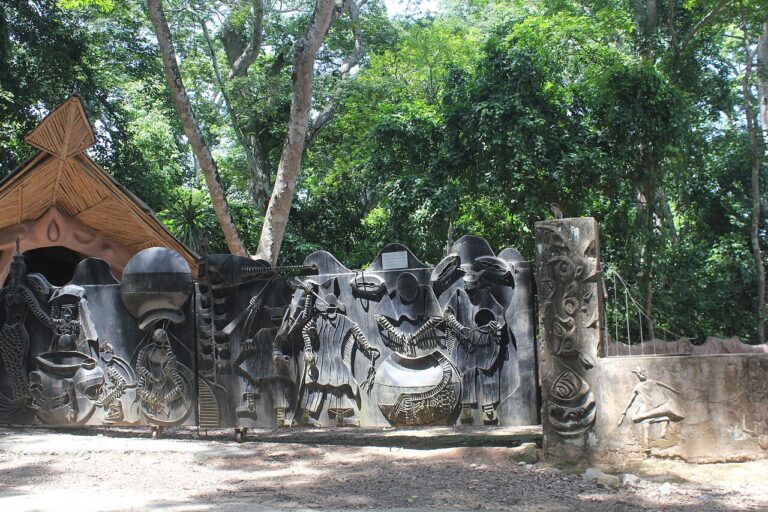
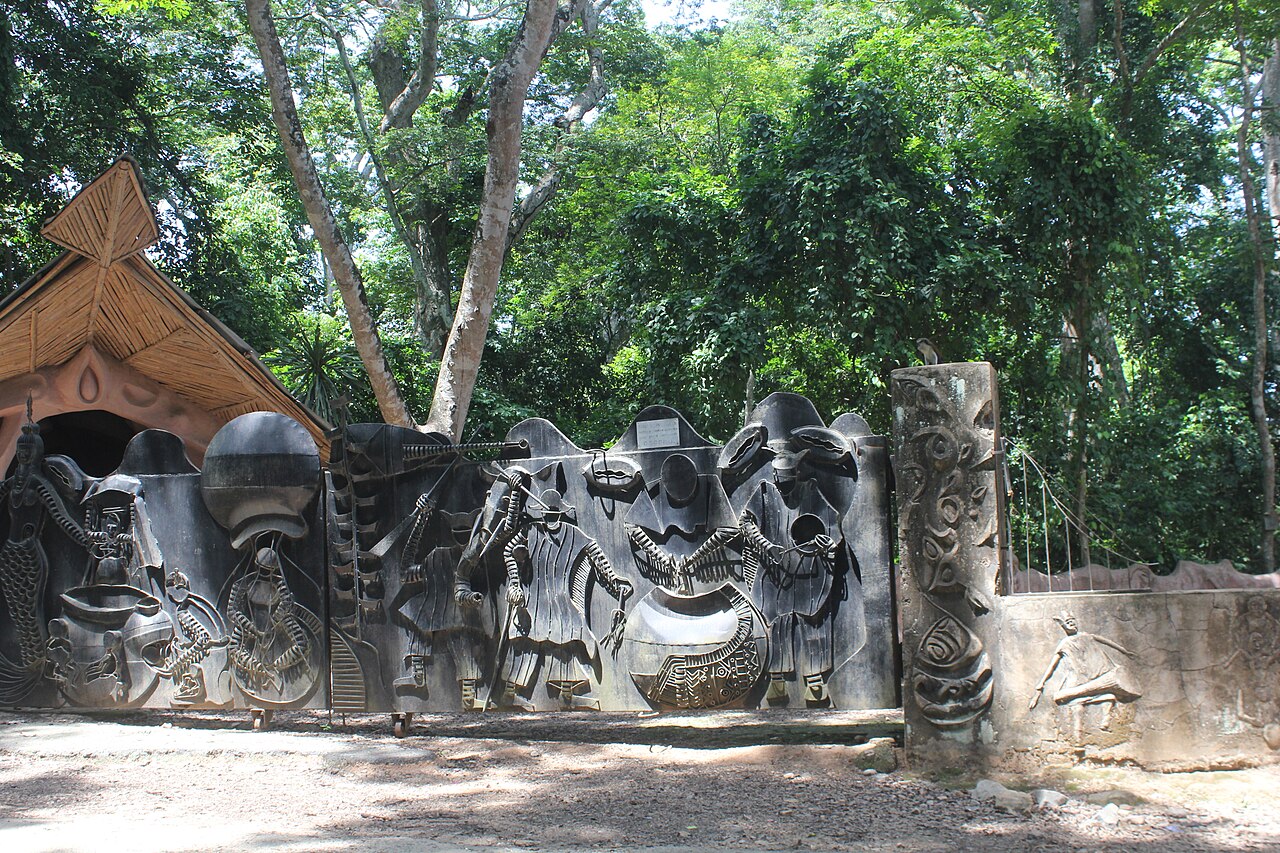
On the edge of Osogbo, a dense forest along the Osun River holds shrines, sanctuaries and sculptures dedicated to Osun, the Yoruba goddess of fertility. It is one of the last areas of primary high forest in southern Nigeria, and it is still a living place of worship. UNESCO inscribed the grove in 2005 for its sacred landscape and the art that fills it.
Much of that art comes from the New Sacred Art movement. From the 1950s the Austrian-born artist Susanne Wenger, known locally as Adunni Olorisha, worked with local artists to restore the shrines and fill the forest with towering cement and clay figures. Her work helped protect the grove from logging and development.
Why it is listed:
- One of the last surviving sacred groves that once ringed Yoruba towns
- Shrines, sculptures and artworks that express Yoruba beliefs
- A living tradition, renewed every year at the Osun-Osogbo Festival
What to do:
- Walk the forest paths with a local guide and visit the main shrines
- See the sculptures and the restored palace and shrine buildings
- Watch for mona monkeys along the river
- Time your visit for the festival in August, when worshippers and visitors fill Osogbo
- Entry fee: charged at the gate, with a separate camera fee reported; check with the site before you go
- Best time: November to March for dry paths, or August for the festival (the 2026 grand finale was on 7 August)
- Allow: 2 to 3 hours
- Safety: no UK travel warning for Osun State as of November 2026
Local tip: This is a shrine, not just a park. Ask your guide before photographing worshippers or shrine interiors, and leave shoes where you are asked to.
Where to stay nearby: Ask us for hotels in Osogbo. Osogbo is also an easy base for Erin Ijesha Waterfalls and Ikogosi Warm Springs.
2. Sukur Cultural Landscape, Madagali (Adamawa State)
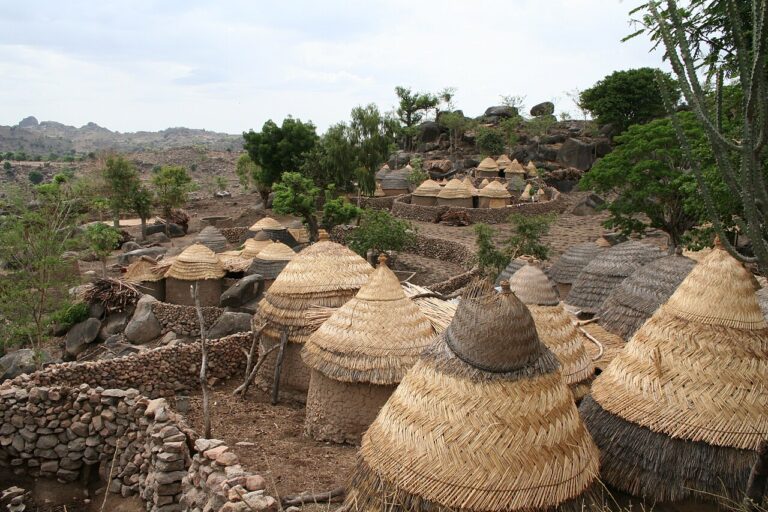
High in the Mandara Mountains on the border with Cameroon, Sukur is a hilltop settlement of stone-walled terraces, paved walkways, thatched granaries and the palace of the Hidi, the traditional ruler. When UNESCO inscribed it in 1999, it became the first cultural landscape in Africa on the World Heritage List.
Sukur was once a centre of iron smelting and trade, and its terraced farms show how people have worked these steep hills for centuries. The Hidi’s palace sits above the village, with sacred sites and old furnace remains spread across the slopes.
Why it is listed:
- A landscape that has barely changed for centuries, shaped by farming and spiritual life
- Terraces, stone paths and the Hidi’s palace, which reflect a strong political and social structure
- Evidence of a long iron-working tradition
Can you visit Sukur now? Not safely. As of November 2026, the UK government advises against all travel to Adamawa State because of insurgency and kidnapping risks. The state completed a 14 km access road to Sukur in 2025, which should make visits easier once security allows. Check the latest UK travel advice before planning a trip.
- Best time: November to March, when the hill paths are dry
- Getting there: by road from Yola, then a steep walk up to the village with a local guide
- Allow: a full day
Where to stay nearby: the nearest large city is Yola. Ask us about stays in Yola once travel to the region is advised again.
Sites on Nigeria’s UNESCO Tentative List
A tentative list is a country’s shortlist of places it plans to nominate for World Heritage status. Being on it is not the same as being inscribed, but it is official recognition that a site may have “outstanding universal value”. Here is every Nigerian site on the list as of November 2026, with the year it was added.
3. Oke Idanre (Idanre Hills), Idanre (Ondo State)
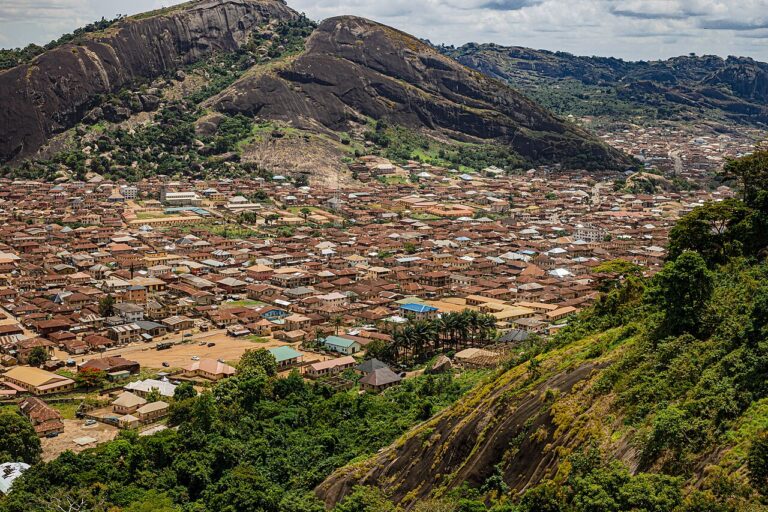
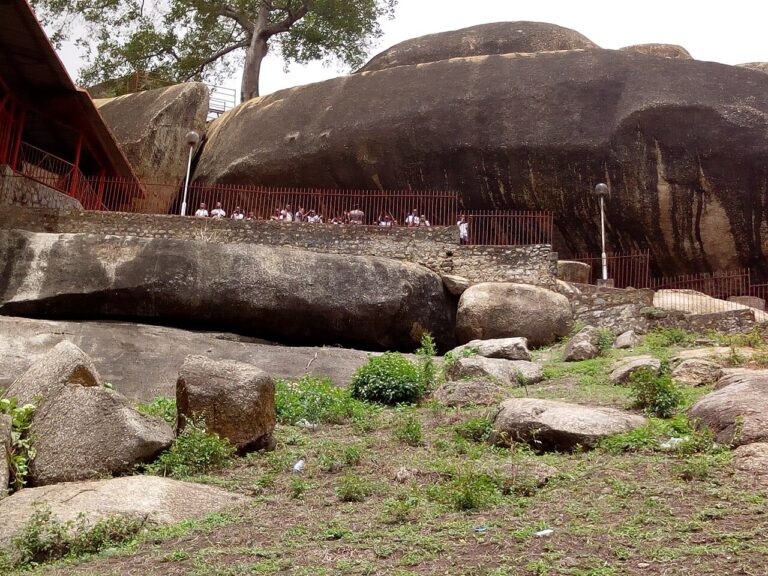
Idanre is a town built among huge granite domes. Climb the hundreds of concrete steps to the old hilltop town, where you will find the former palace of the Owa, old court buildings and shrines. The views across the hills are some of the best in the south-west.
Nigeria added Idanre to its tentative list in 2007 for its striking landscape and the cultural history of the people who lived on the hilltop for centuries. Read more in our Idanre Hills visitor guide.
- Added: 2007
- Visit now? Yes. No UK warning for Ondo State as of November 2026
- Tip: start the climb early in the morning; there is little shade on the steps
Where to stay nearby: Ask us for hotels in Akure, about 30 minutes away.
4. Ogbunike Caves, Ogbunike (Anambra State)
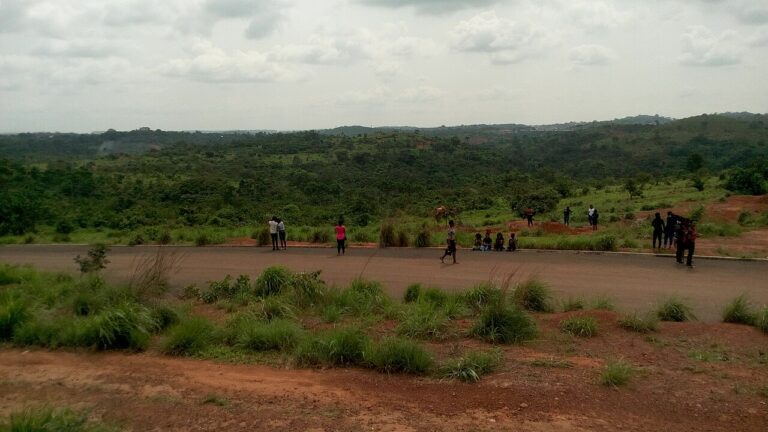
Reached by a long flight of steps down into a forested valley, the Ogbunike Caves are a network of chambers and tunnels with streams, pools and a large bat colony. The caves are sacred to the local community, and visitors remove their shoes before entering.
The caves are celebrated each year at the Ime Ogba festival. Nigeria added them to the tentative list in 2007 as a mixed natural and cultural site.
- Added: 2007
- Visit now? Check advice. The UK advises against all but essential travel to Anambra State as of November 2026
- Tip: wear clothes you do not mind getting wet; some passages involve wading
Where to stay nearby: Ask us for hotels in Onitsha or Awka.
5. Ancient Kano City Walls and Associated Sites (Kano State)
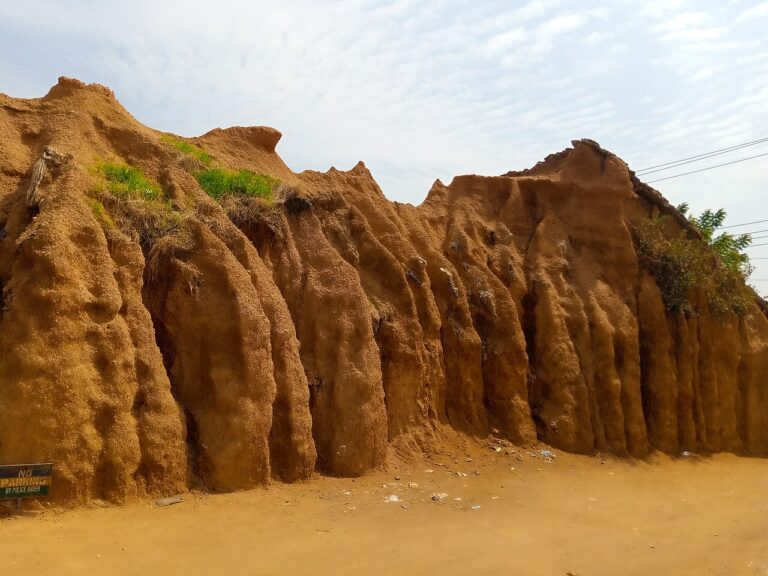
Kano’s earth walls were begun around the 11th century and extended over the following centuries to enclose the old city, its farmland and the sacred Dala Hill. Long stretches still stand, along with several historic gates, the Emir’s Palace, Kurmi Market and the Kofar Mata dye pits, which have been in use for centuries.
The walls joined Nigeria’s tentative list in 2007. They tell the story of one of the great trading cities of the Sahel. See our Kano Ancient City guide for the Gidan Makama Museum, which was under restoration as of November 2026.
- Added: 2007
- Visit now? Check advice. The UK advises against all but essential travel to Kano State as of November 2026
- Tip: hire a local guide to find the best-preserved sections of the wall
Where to stay nearby: Ask us for hotels in Kano.
6. Alok Ikom Stone Monoliths, Ikom (Cross River State)
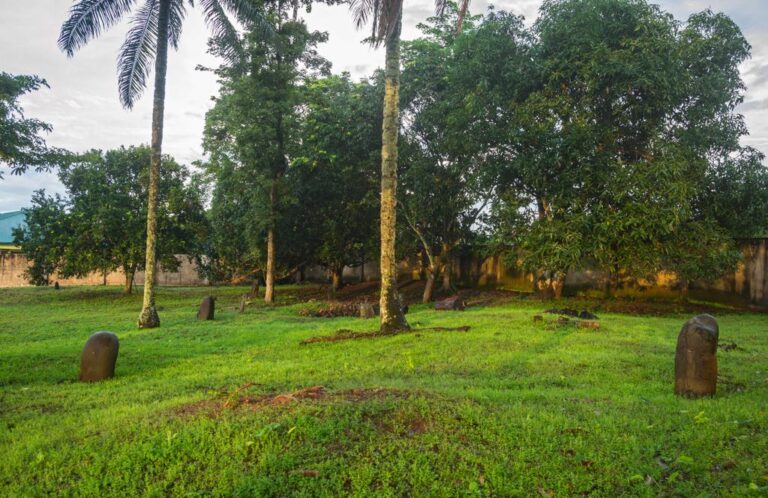
Around Alok and other villages near Ikom stand hundreds of carved basalt stones, known locally as akwanshi. Many are carved with faces, navels and geometric patterns, and they are arranged in circles in the forest and village grounds. Their exact age is debated, and their meaning is tied to the ancestors of the Ejagham-speaking communities who still live here.
Nigeria added the monoliths to its tentative list in 2007. They are among the most unusual stone monuments in West Africa.
- Added: 2007
- Visit now? Yes, with a local guide. The UK warning for Cross River covers riverine areas, not inland Ikom, as of November 2026
- Tip: greet the village head and ask permission before visiting; a small fee or gift is customary
Where to stay nearby: Ask us for hotels in Calabar, or stay in Ikom itself.
7. Arochukwu Long Juju Slave Route, Arochukwu (Abia State)
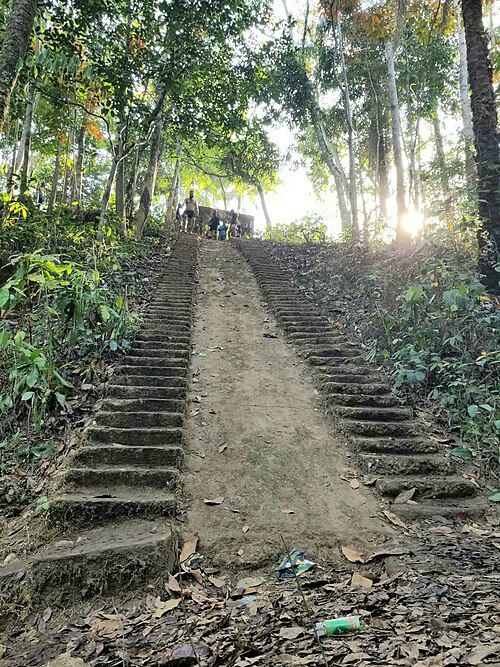
Arochukwu was the seat of the Aro, whose Ibini Ukpabi oracle, known to the British as the Long Juju, drew pilgrims from across south-eastern Nigeria. The oracle was also tied to the Atlantic slave trade: many people taken to consult it were sold into slavery. The British destroyed the shrine during the Aro Expedition of 1901–1902.
Today visitors can walk to the cave temple complex and see the slave route and historic sites with a local guide. It joined the tentative list in 2007.
- Added: 2007
- Visit now? Check advice. The UK advises against all but essential travel to Abia State as of November 2026
- Tip: visit with a guide from the community, who can explain the oracle’s history and its link to the slave trade
Where to stay nearby: Ask us for hotels in Umuahia.
8. Benin Iya and Sungbo’s Eredo (Edo and Ogun States)
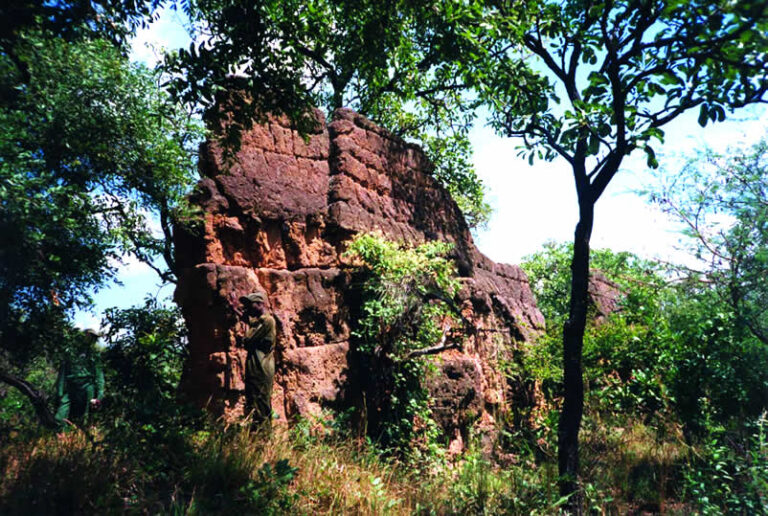
This entry joins two of the largest earthworks in Africa. The Benin Iya are the moats and walls dug around Benin City and its surrounding villages over centuries. Sungbo’s Eredo is a deep ditch and bank that runs for about 160 km around the Ijebu-Ode area, built around a thousand years ago and linked in local tradition to a queen called Bilikisu Sungbo.
Both were added to Nigeria’s tentative list in 1995. Sections of the Eredo can be seen in the forest near Ijebu-Ode; parts of the Benin moat survive within Benin City. For the city’s royal heritage, see our Benin City guide.
- Added: 1995
- Visit now? Yes. No UK warning for Edo or Ogun State as of November 2026
- Tip: the Eredo is hard to find on your own; ask in Ijebu-Ode for a guide
Where to stay nearby: Ask us for hotels in Benin City or Ijebu-Ode.
9. Surame Cultural Landscape (Sokoto State)
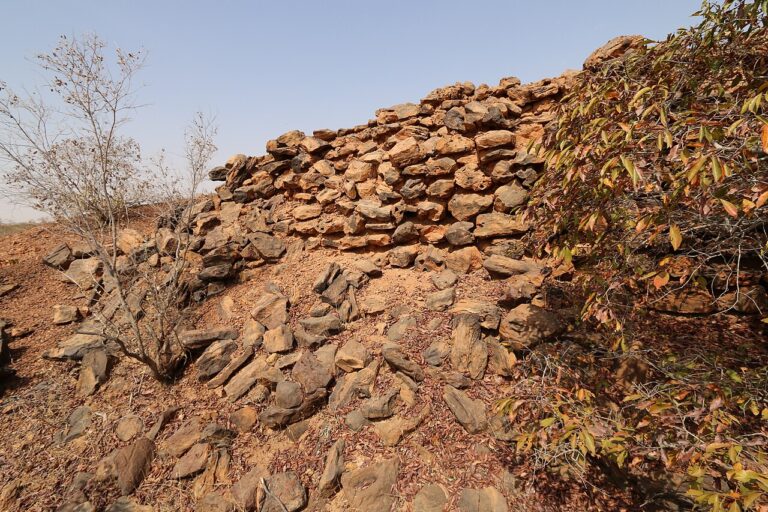
Surame was the capital of the Kebbi kingdom, founded in the early 16th century under Muhammadu Kanta. Its stone walls and ruins spread across a rocky landscape in Sokoto State, and local tradition still attaches great importance to the site.
- Added: 2007
- Visit now? Not advised. The UK advises against all travel to Sokoto State as of November 2026
10. Kwiambana and Ningi (Zamfara and Bauchi States)
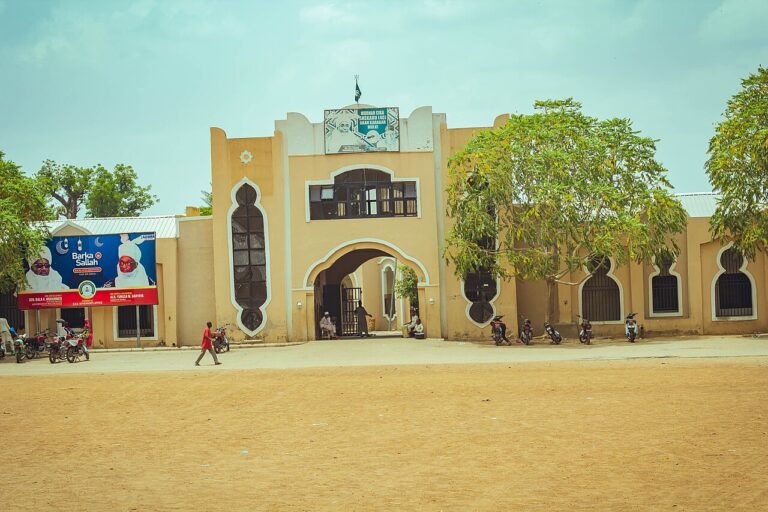
This entry covers the ruins of two historic fortified towns in northern Nigeria, with walls, gates and house foundations that show how these settlements were organised. Both have been on the tentative list since 1995.
- Added: 1995
- Visit now? Not advised. The UK advises against all travel to Zamfara and against all but essential travel to Bauchi as of November 2026
11. Niger Delta Mangroves (Niger Delta states)
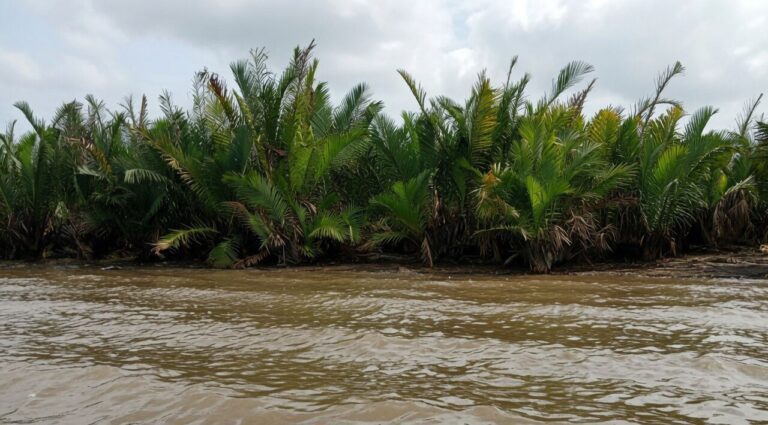
The Niger Delta holds the largest mangrove forest in Africa, a maze of creeks and islands that shelters fish, birds and rare primates and supports millions of people. Oil pollution and logging have damaged large areas. The mangroves have been on the tentative list since 1995.
For a safe taste of Nigeria’s mangroves, try the boardwalk at Lekki Conservation Centre in Lagos.
- Added: 1995
- Visit now? The UK advises against all travel to riverine areas of Delta, Bayelsa, Rivers and Akwa Ibom as of November 2026
12. Gashaka Gumti National Park (Taraba and Adamawa States)
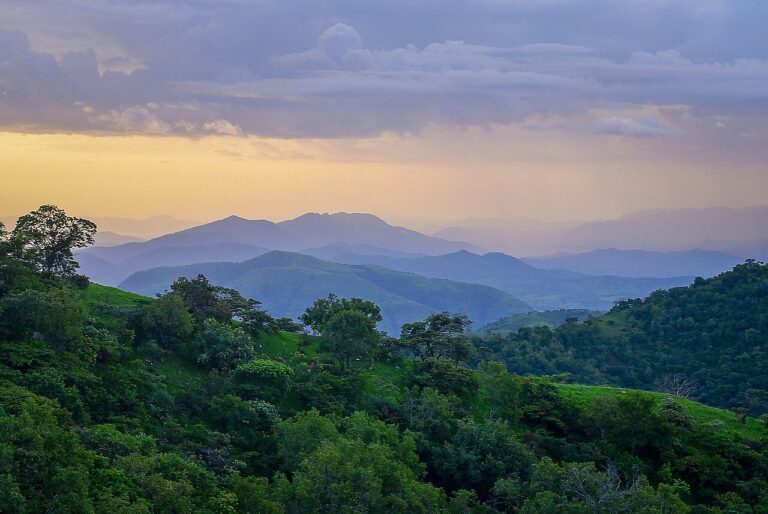
Nigeria’s largest national park runs along the Cameroon border, from savannah to montane forest. It includes Chappal Waddi, the highest point in Nigeria, and is home to chimpanzees, many bird species and large forest wildlife. Nigeria resubmitted the park to its tentative list in 2025 as a natural site.
- Added: 2025 (replacing an earlier 1995 entry)
- Visit now? Not advised. The UK advises against all travel to Adamawa and against all but essential travel to Taraba as of November 2026
13. Cross River–Korup–Takamanda (Cross River State)
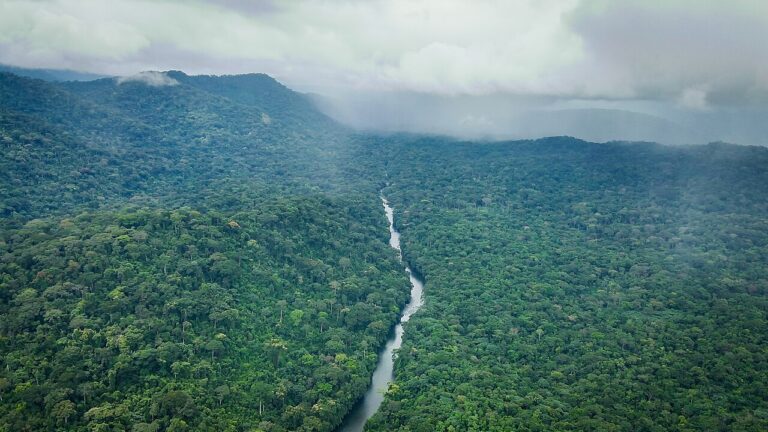
This cross-border rainforest links Cross River National Park in Nigeria with Korup and Takamanda in Cameroon. It shelters some of the richest forest in Africa, including the critically endangered Cross River gorilla. It was added to the tentative list in 2020.
The Oban and Okwangwo divisions of the park can be visited with rangers or approved guides. Many visitors combine a trip with Obudu Mountain Resort.
- Added: 2020
- Visit now? Yes, with a guide. The UK warning for Cross River covers riverine areas as of November 2026
- Tip: arrange permits and a guide in Calabar before you set off
Where to stay nearby: Ask us for hotels in Calabar.
14. Lake Chad Cultural Landscape (Borno and Yobe States)
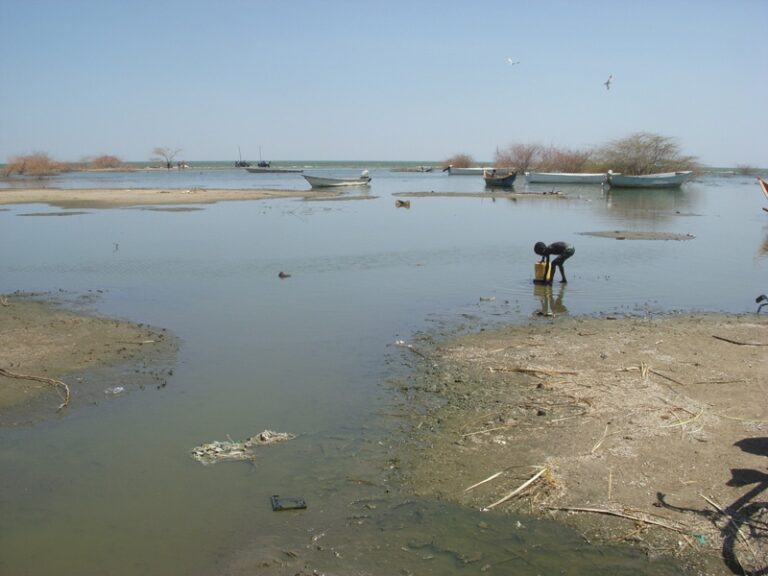
Shared with neighbouring countries, the Lake Chad basin holds wetlands, ancient settlement mounds and traditions of people who have lived by the lake for thousands of years. The Nigerian part lies within the Chad Basin National Park. It was added to the tentative list in 2018.
- Added: 2018
- Visit now? Not advised. The UK advises against all travel to Borno and Yobe States as of November 2026
How a Nigerian Site Becomes a World Heritage Site
Nigeria’s National Commission for Museums and Monuments and the National Park Service manage most of these sites. To earn World Heritage status, a site must first be on the tentative list. Nigeria then prepares a detailed nomination file showing why the site matters to all of humanity and how it will be protected.
Expert bodies review the file: ICOMOS for cultural sites and IUCN for natural ones. The World Heritage Committee then decides at its yearly meeting. The process often takes years, which is why many Nigerian sites have been on the tentative list since 1995 or 2007.
Planning a Heritage Trip in Nigeria
The easiest heritage trip is in the south-west, where there are no UK travel warnings as of November 2026. A long weekend can take in the Osun-Osogbo Sacred Grove, Idanre Hills and Sungbo’s Eredo, with Olumo Rock on the way from Lagos.
- Go in the dry season. November to March brings drier paths and easier roads.
- Hire local guides. Many sites have no signs, and guides explain the history and the rules of sacred places.
- Carry cash. Entry fees, guide fees and camera fees are usually paid in naira on the spot.
- Check travel advice. Read the UK government’s Nigeria travel advice or your own government’s advice before you book.
- Book your base early. Rooms in Osogbo fill up around the August festival.
Planning a heritage trip? Tell us where you are going and we will find you a hotel nearby, with a free airport transfer when you book with Bookia.
Frequently Asked Questions About UNESCO Sites in Nigeria
How many UNESCO World Heritage Sites are in Nigeria?
Nigeria has two UNESCO World Heritage Sites: the Sukur Cultural Landscape in Adamawa State, inscribed in 1999, and the Osun-Osogbo Sacred Grove in Osun State, inscribed in 2005.
What was the first UNESCO World Heritage Site in Nigeria?
The Sukur Cultural Landscape in Adamawa State was the first, inscribed in 1999. It was also the first cultural landscape in Africa to join the World Heritage List.
Can I visit the Osun-Osogbo Sacred Grove?
Yes. The grove is open to visitors during the day, with an entry fee paid at the gate and a separate camera fee reported. Go with a local guide, and check current fees with the site before you go.
When is the Osun-Osogbo Festival?
The festival takes place every August and ends with a grand procession to the river. The 2026 grand finale was on 7 August. Dates are set each year, so check before you travel.
Is it safe to visit Sukur?
Not at the moment. As of November 2026, the UK government advises against all travel to Adamawa State, where Sukur is located. Check the latest travel advice before planning a visit.
What is the UNESCO tentative list?
It is a country’s official shortlist of sites it intends to nominate for World Heritage status. Nigeria’s list includes Idanre Hills, Ogbunike Caves, the Ancient Kano City Walls, the Alok Ikom monoliths and Gashaka Gumti National Park, among others.
Which UNESCO-listed sites in Nigeria are easiest to visit?
The Osun-Osogbo Sacred Grove, Idanre Hills and Sungbo’s Eredo in the south-west are the easiest, with no UK travel warnings for their states as of November 2026. All three can be reached by road from Lagos.
Plan Your Heritage Trip
Nigeria’s World Heritage Sites are only the start. For waterfalls, wildlife and city sights, read our guide to the top tourist attractions in Nigeria, or browse hotels by city.